Description
The great British road test
Les Thomas
TN180 Sep 26
I’d touched down in London during the hottest UK summer on record.
Soon afterwards, waiting for a bus with my guitar, a geezer across the road yelled out, “Have guitar, will travel!”
I think he had me pegged.
That was the beginning of five weeks on the road, from London’s fabled Green Note and the union owned Bread & Roses to Oxford, Tolpuddle, Sheffield, Bristol, North Devon, Wales and Brighton.
I came to think of the whole adventure as The Great British Road Test.
Could songs I’d written thousands of kilometres away connect with people who knew nothing about me?
Could distinctly Australian stories travel?
The whole trip had grown out of being accepted to perform at the Tolpuddle Martyrs’ Festival.
For anyone involved in the trade union movement, Tolpuddle is something of a pilgrimage.
Dorset local, Billy Bragg, plays there whenever he can.
In 2026, he happened to be touring North America, but the spirit of solidarity was alive and strong.
When I arrived, organiser Kev greeted me with a massive smile.
We’d been corresponding for months and that day happened to be his 50th birthday.
Kev escorted me across the festival site and down the narrow main street, past the famous sycamore tree associated with the six agricultural labourers who formed a union in 1834 to fight poverty wages.
Their punishment for organising was transportation to Australia.
Then we turned into an old church hall, where the festival’s Radical History School was taking place.
The connection between where I had come from and where I was standing was impossible to miss.
I ummed and ahed about which of my own songs to start with, but decided instead to kick off with Paul Kelly and Kev Carmody’s From Little Things Big Things Grow.
With its story of the Gurindji people’s long struggle for workers’ rights and land rights, I thought this would suit best.
In a room full of people steeped in labour history, it seemed perfectly fitting.
At the end of Tolpuddle, with some time to kill, I stopped at the bar.
Some trade union comrades who had enjoyed my set invited me over.
“Should I get the guitar out?” I asked.
It didn’t take much encouragement.
I played the old labour movement classics Joe Hill and Which Side Are You On?
Before long came the request: “Do you know any Paul Kelly?”
I launched into From Little Things Big Things Grow again.
“F***ing hell!” the ringleader exclaimed.
“My parents in law teach their school kids that every year back in Australia!
“You’re going to have to come and play at our festival in North Devon!”
And just like that, another adventure had been hatched.
A couple of weeks later I was making my way across the country to that small, invitation-only festival.
A chance encounter at the bar had turned into firm friendships.
One of the most affecting moments came at Blackwell’s bookshop in Oxford, where I presented a show built around songs, stories and social history.
I sang Freedom Fighters, my song about Tunnerminnerwait and Maulboyhenner, two Aboriginal resistance fighters who became the first people publicly executed in Melbourne in 1842.
Before I left Australia, Elder Uncle Jim Everett from Cape Barren Island had asked me to take this song and story far and wide.
I fully intended to honour that.
After the song, a man came up to me.
He described himself, with the genuine regional accent, as “a true Oxford man”.
He had tears in his eyes.
He was far from the only one.
Tolpuddle may have been the original reason for the trip, but the Great British Road Test soon developed a momentum of its own.
In Hastings, I played a cameo set with Jason McNiff and Dan Raza at the pirate scented Jenny Lind Inn.
In Sheffield, I shared a gig with Marilla Homes for a small but perfectly formed audience.
At the Lyceum Folk Club in Newport, Wales, I spotted a poster advertising fellow touring Aussie Bruce Watson, due to arrive a few weeks later.
We would pass like ships in the musical night.
Touring in that heat with a guitar and luggage, relying largely on British Rail, wasn’t what you’d call glamorous.
I dunked my head beneath the waves of the Bristol Channel on one side of the country and the English Channel on the other.
There were trains, buses, unfamiliar streets, old pubs, folk clubs, festival fields and the occasional scramble to work out where on earth I was supposed to be next.
By the final weekend, the Road Test had become literal.
After North Devon, I travelled overnight back to London, endured a sleepless night when my accommodation turned out to be the dorm from hell, I checked out immediately, and headed down to Brighton early the next morning, arriving in time for a mid-afternoon show at the Prince Albert with Robb Johnson and The Irregulars.
By that stage, I was certainly being road tested.
But so were the songs.
Before leaving Australia, I’d wondered how songs so rooted in Australian places and experiences would travel.
Would an audience in Sheffield or London care about Holdens rolling off an assembly line, or homelessness in modern day Ballarat?
As it turned out, my Australianness wasn’t an obstacle at all.
It became an instant subject of conversation and interest.
Singing about Holdens didn’t require anyone to have owned one.
A song about the loss of Australian car manufacturing could speak to people in British towns that had watched their own industries disappear.
Ballarat might be on the other side of the world, but stories about work, class, community and change required remarkably little translation.
Perhaps that shouldn’t have surprised me.
Britain and Australia share an enormous amount of history, culture, politics and experience, however complicated that shared history can be.
“Lean into it,” one of my mentors had told me.
That turned out to be exactly right.
I heeded Kavisha Mazzella’s advice to get them singing along, and it worked like magic.
I didn’t have to lay an Aussie accent on with a trowel.
I just had to sing from the heart about the places and people I know and care about.
The response to I Remember Everything reinforced the point.
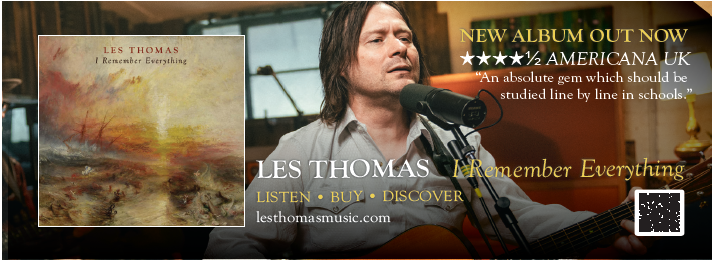
The album received generous UK reviews, including four stars from Americana UK, which called it an “absolute gem which should be studied line by line in schools”.
Songs from the record also found their way onto BBC and community radio, with West Norfolk Radio naming it Album of the Week.
I’d arrived in Britain carrying 50 CDs.
By the end of the tour, I had completely sold out.
But the most important measure wasn’t records sold or radio plays.
It was what happened in the rooms: people listening intently, then coming up afterwards to tell me what the songs had brought up for them.
If I had to put one word on the entire experience, it would be affirming.
Five weeks on the road had tested the music, my body and occasionally my mind.
But I came home knowing something with a certainty I hadn’t had when I left.
I can trust these songs.
Perhaps that geezer at the London bus stop knew something after all.
Have guitar, will travel.